Managing employees effectively is one of the most important responsibilities of any business owner. Whether you run a small startup, a growing company, or a large organization, keeping track of employee working hours helps maintain productivity, control labor costs, and ensure accurate payroll processing. However, when working hours are recorded manually without a consistent process, mistakes can easily occur.
This is where an employee time sheet becomes an essential business tool. It provides a structured way to record when employees start work, finish their shifts, take breaks, and complete their assigned hours. With accurate time records, businesses can make better decisions, manage workloads efficiently, and maintain transparency between employees and management.
In this article, we will explore why accurate employee time tracking matters, how it benefits businesses, and what you should consider when implementing a reliable timekeeping process.
What Is an Employee Time Sheet?
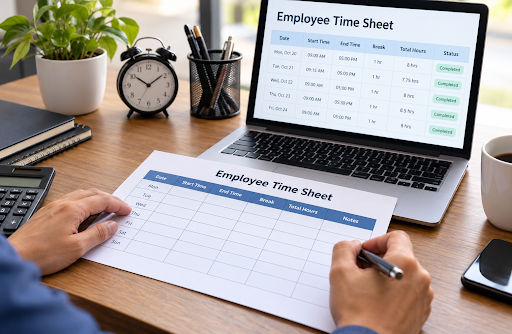
An employee time sheet is a record used to track the amount of time an employee spends working during a specific period. Depending on the business, it may be maintained daily, weekly, biweekly, or monthly.
Traditional time sheets are often prepared using paper forms or spreadsheets. Modern businesses may use digital time-tracking systems that allow employees to record their working hours electronically.
A typical time sheet may include:
- Employee name and identification details.
- Date and scheduled working hours.
- Clock-in and clock-out times.
- Break durations and total hours worked.
- Overtime hours, where applicable.
- Project details or task-related hours.
- Supervisor approval and corrections.
These records help businesses understand how working time is distributed and provide supporting information for payroll, attendance management, and project planning.
1. Ensures Accurate Payroll Processing
One of the biggest reasons businesses need reliable time records is payroll accuracy. Employees expect to be paid correctly for the hours they work, and employers need dependable information to calculate wages, overtime, and other applicable payments.
Without proper time tracking, businesses may accidentally overpay or underpay employees. Even small errors can create confusion, reduce employee confidence, and increase administrative work.
An accurate employee time sheet provides a clear record of regular hours, approved overtime, and relevant adjustments. Payroll teams can use this information to verify working hours before processing salaries.
For businesses with hourly employees, shift workers, or part-time staff, accurate records are particularly important. A consistent approval process also helps identify discrepancies before they affect payroll.
2. Improves Employee Productivity
Understanding how employees spend their working hours can help managers identify opportunities to improve productivity. Time records provide useful information about workload distribution, project progress, and the amount of time required to complete recurring tasks.
For example, a marketing agency may discover that certain activities consistently take longer than expected. A manufacturing company might identify scheduling problems that result in unnecessary downtime.
These insights help managers review processes, adjust responsibilities, and provide additional training when needed.
However, time tracking should not become a way to monitor every minute unnecessarily. The goal is to understand work patterns and remove obstacles, rather than creating pressure that affects employee morale.
When used fairly, time records help businesses make practical improvements while allowing employees to focus on meaningful work.
3. Helps Control Labor Costs
Labor expenses represent a significant portion of operating costs for many businesses. If working hours are not recorded accurately, managers may struggle to understand whether staffing levels and schedules are appropriate.
Reliable time tracking helps businesses identify unplanned overtime, repeated scheduling gaps, and differences between estimated and actual working hours.
For instance, if a company regularly schedules more employees than required during quieter periods, managers can review shift arrangements and adjust future schedules. Similarly, if a team consistently works overtime to meet deadlines, the business can investigate whether additional resources or better planning are necessary.
An effective timekeeping process supports informed budgeting and helps prevent avoidable labor expenses.
4. Supports Better Attendance Management
Employee attendance directly affects daily operations. Frequent late arrivals, unexplained absences, and inconsistent break records can create difficulties for managers and colleagues.
A well-maintained employee time sheet helps businesses maintain organized attendance records. Managers can review attendance patterns, confirm approved leave, and identify discrepancies that require clarification.
For example, a retail business with multiple shifts needs to know whether enough employees are available during peak hours. Accurate attendance information helps managers arrange replacement staff when necessary and maintain smooth operations.
Clear attendance policies are equally important. Employees should understand how to record their time, report missed entries, and request corrections. This reduces confusion and promotes consistent treatment across the workforce.
5. Simplifies Project Management and Workload Planning
Businesses that manage multiple projects need to understand how much time different activities require. Without reliable records, it can be difficult to estimate project costs, assign resources, or determine why deadlines are being missed.
Time sheets can help project managers compare planned hours with actual hours. They can also reveal which tasks require additional resources and which processes could be improved.
Consider a web development company managing several client projects simultaneously. By reviewing time spent on design, development, testing, and revisions, the company can improve future estimates and allocate team members more effectively.
This information is also valuable when evaluating project profitability. Comparing labor hours with project budgets helps businesses identify work that may be taking longer than anticipated.
6. Encourages Transparency and Accountability
A clear timekeeping process creates a shared understanding of working hours and attendance expectations. Employees know how their hours are recorded, while managers have a consistent method for reviewing attendance and approving timesheets.
This transparency can reduce disagreements about overtime, missed punches, and payroll calculations.
An employee time sheet also gives employees an opportunity to review their own records and report errors before payroll is finalized.
Businesses should establish clear guidelines covering time entry, approvals, corrections, and record retention. Access to employee information should be limited to authorized individuals, and tracking practices should respect employee privacy.
When employees understand the purpose of time tracking and have a fair way to challenge mistakes, the process becomes more trustworthy.
7. Reduces Administrative Work
Manually collecting attendance information from different departments can consume valuable time. Managers may need to check paper records, calculate total hours, follow up on missing entries, and transfer information into payroll systems.
A standardized process reduces these repetitive tasks. Digital tools can simplify time entry, calculate working hours, flag incomplete records, and organize information for approval.
Even businesses that are not ready to invest in specialized software can benefit from a well-designed spreadsheet and a consistent submission schedule.
The important point is to choose a method that suits the organization’s size, staffing structure, and administrative needs.
8. Helps Businesses Maintain Reliable Records
Organized working-hour records can support internal reviews, payroll checks, and responses to employee questions. Depending on the jurisdiction and employment arrangements, businesses may also have legal obligations relating to working hours, overtime, breaks, and record retention.
A reliable employee time sheet helps employers maintain documentation that can be reviewed when needed.
However, a time sheet alone does not guarantee legal compliance. Employers should understand the applicable employment laws, maintain the required supporting records, and ensure that their timekeeping practices reflect actual working hours.
Reviewing records regularly is a useful way to identify missing information and correct inconsistencies before they become larger problems.
Best Practices for Maintaining Accurate Employee Time Sheets
To get the most value from time tracking, businesses should establish a straightforward and consistent process.
Follow these practical tips:
- Set clear expectations: Explain when employees should record their working hours and submit their time sheets.
- Choose a suitable system: Use paper forms, spreadsheets, or digital software according to your business requirements.
- Record time consistently: Ask employees to enter their hours promptly rather than relying on memory at the end of the week.
- Review entries regularly: Check missing punches, unusual overtime, and calculation errors before approving records.
- Establish a correction process: Allow employees to report mistakes and document approved changes.
- Protect employee information: Restrict access to authorized staff and follow applicable privacy and recordkeeping requirements.
- Train managers and employees: Make sure everyone understands the process and how to use the chosen system.
These practices help create a dependable timekeeping process without making daily administration unnecessarily complicated.
How to Choose the Right Employee Time Tracking Method?
The best timekeeping method depends on the size of your workforce and the nature of your operations.
Small businesses with a few employees may find that a spreadsheet is sufficient. Companies with rotating shifts, remote teams, field employees, or multiple departments may benefit from digital time-tracking software.
Before choosing a system, consider ease of use, reporting features, payroll integration, approval workflows, data security, and overall cost.
It is also worth checking whether the system supports overtime calculations, project-based tracking, and the work arrangements used by your organization.
The right solution should make time records easier to maintain and review, not introduce unnecessary complexity.
Conclusion
Accurate employee timekeeping is more than an administrative task. It helps businesses process payroll correctly, manage attendance, control labor expenses, improve project planning, and maintain transparent workplace practices.
By implementing a consistent employee time sheet process, organizations can reduce avoidable errors and make better use of their workforce data. Whether you use a simple spreadsheet or a dedicated digital system, the key is to maintain accurate records, review them regularly, and treat employees fairly.
For businesses looking to improve their day-to-day operations, investing time in a reliable timekeeping process can deliver lasting benefits for both management and employees.


Amilia Brown is a seasoned business writer & strategist who simplifies complex business concepts and turn them into engaging narratives. As a trusted business writer, she delivers actionable insights with precision.




 Indian CEOs in America: A Detailed Account of the Masterminds
 Add Boosters to Your Business Wheels in 2025 with These 5 Strategies
 6 Skills Every Business Leader Should Possess and Hone
 The Vital Role Of Plastic Tubing In Our Medical Infrastructure
 Why Treating Your Employees like Assets and Investing in Them is a Good Idea