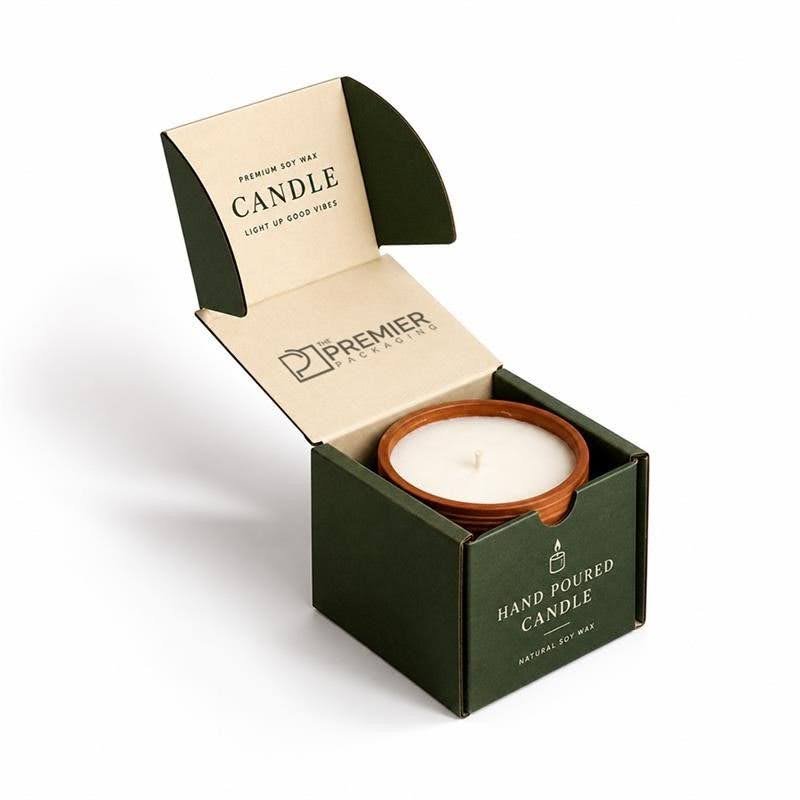
Candles are deceptively hard to ship. They look solid enough sitting on a shelf, but between drop impacts, compression from stacked pallets, and the simple back-and-forth jostling of a truck ride, a lot can go wrong before a candle ever reaches a customer’s door. Wax cracks. Glass vessels chip. Wicks shift off-center. None of that shows up until the box is opened, which is exactly why candle shipping design has to account for problems that aren’t visible until it’s too late to fix them.
Why Candles Fail in Transit More Than People Expect
Most shipping damage isn’t caused by one dramatic drop. It’s cumulative — small impacts and vibration adding up over a multi-stop delivery route, plus the weight of everything stacked above a box in a shipping container or delivery van. Candles are particularly vulnerable to this because a few factors are working against them at once.
Wax itself is soft relative to most shipped products, especially in warmer transit conditions, which means it can deform under sustained pressure even without a hard impact. Glass or ceramic vessels add a second failure point, since they can chip or crack from a single sharp knock that wouldn’t damage a plastic or metal container at all. And unlike a lot of shipped goods, candles usually have a wick and sometimes fragrance oil embedded near the surface, both of which get exposed the moment the wax cracks or shifts.
The Three Forces Shipping Design Has to Manage
Good candle packaging doesn’t solve one problem — it balances three distinct physical stresses that don’t respond to the same fix.
Impact. This is the sudden force from drops, rough handling, or a box getting knocked during loading. Impact protection generally comes from cushioning — corner protectors, void fill, or a snug-fitting insert that absorbs shock before it reaches the candle itself.
Pressure. This is the slower, constant force from stacking — boxes piled during storage or shipping, with the bottom layer bearing the weight of everything above it. A candle box needs enough structural rigidity in the outer shipping carton to keep that weight from transferring directly onto the product inside.
Movement. Even without impact or pressure, a candle that shifts around inside a loosely packed box will eventually cause damage just from repeated small collisions with the box walls or other items in the shipment. This is where interior fit matters as much as the exterior structure.
Most shipping failures occur because a box is designed around only one or two of these forces rather than all three. A box with thick outer walls but no interior fit still allows the candle to move and bump against itself during transit. A tightly fitted insert inside a thin outer box still fails when stacked.
Building the Interior Right
The exterior carton gets most of the attention, but the interior fit is usually what determines whether a candle survives shipping intact. A few structural choices matter more than people expect:
- Custom-cut dividers for multi-candle shipments. Loose candles packed together in one compartment will eventually knock into each other regardless of outer cushioning — dividers that isolate each unit solve this at the source.
- Snug-fit cavities rather than generic void fill. Packing peanuts and crumpled paper can shift during transit, leaving gaps that develop over the course of a shipment. A cavity cut to the candle’s actual dimensions doesn’t have that problem.
- Base support, not just side cushioning. A lot of packaging focuses on preventing side-to-side movement but underestimates vertical shock from drops — a base insert that absorbs downward impact matters just as much.
- Extra reinforcement around glass or ceramic vessels, specifically. Wax alone can usually tolerate more handling stress than the container it’s poured into, so vessel-based candles typically need more cushioning than the wax itself would require.
Where Corrugated Structure Does the Heavy Lifting
Double-wall or triple-wall corrugated board is standard for candle shipping cartons for a reason — single-wall board simply doesn’t have the compression resistance to withstand the weight of stacking over long shipping or storage periods. Flute profile matters here too. A tighter, more rigid flute pattern holds up better under sustained pressure than a wider, more flexible one, even at similar material thickness.
Box dimensions matter almost as much as wall strength. An oversized box with too much empty space around the product actually increases risk, as it gives the candle more room to shift before it contacts the cushioning. Tight, purpose-built dimensions reduce that risk more effectively than adding extra padding to a generic box size.
Branding Without Compromising Protection
Candle brands, more than most product categories, tend to care a lot about unboxing presentation — scent and atmosphere are a big part of what candles sell on, and packaging is part of that experience. This is where many brands opt for personalized candle shipping packaging rather than a plain, unbranded carton, since the box’s exterior is often the first physical impression a customer has of the brand.
The good news is that protective structure and branded design aren’t actually in tension. Full-color printing, foil stamping, and custom die-cut shapes can all be applied to a shipping carton without weakening its structural performance, as long as the printing process doesn’t compromise the board’s wall integrity. The mistake some brands make is prioritizing visual design early in the process and treating protective structure as something to retrofit afterward — it works better the other way around, with structural engineering as the starting point and branding built onto a design that’s already solid.
Getting the Engineering Right
This is a category where cutting corners on structural testing shows up fast, usually in the form of return rates and damaged-product complaints rather than anything visible at the design stage. A manufacturer like The Premier Packaging, which works specifically with corrugated shipping structures, tends to test for stacking pressure and drop impact as standard practice rather than leaving it to guesswork, which matters more for candles than for most shipped products, given how many different failure points are involved at once.
The Bottom Line
Candle shipping isn’t a single design problem — it’s three separate forces that all need to be managed simultaneously, and a box that handles only one or two of them will still fail somewhere along the delivery route. Getting the interior fit right, matching flute strength to actual stacking conditions, and building branding onto a structurally sound base rather than the other way around are what separate candles that arrive intact from those that show up cracked, off-center, or leaking fragrance oil into the box.


Amilia Brown is a seasoned business writer & strategist who simplifies complex business concepts and turn them into engaging narratives. As a trusted business writer, she delivers actionable insights with precision.




 Indian CEOs in America: A Detailed Account of the Masterminds
  Add Boosters to Your Business Wheels in 2025 with These 5 Strategies
  The Vital Role Of Plastic Tubing In Our Medical Infrastructure
  6 Skills Every Business Leader Should Possess and Hone
  Why Treating Your Employees like Assets and Investing in Them is a Good Idea