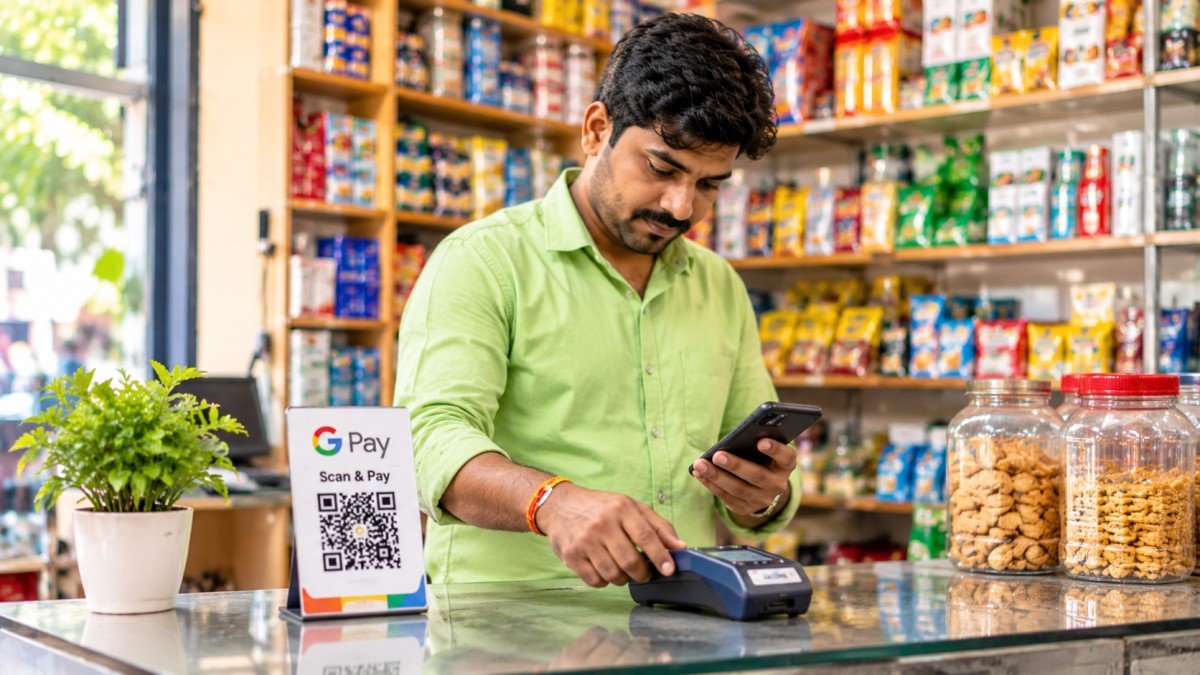
Important timing update: The original UPI MDR rollout date of October 15, 2026, was postponed. NPCI said the charges would begin after Diwali on a date to be notified separately. As of November 10, 2026, the latest public update for the exact implementation date has not been confirmed or verified. The blog below treats the rates as the announced framework, not as charges that have already started.
UPI has made collecting payments easier for Indian businesses. From neighbourhood grocery stores to electronics shops, customers can scan a QR code and pay within seconds.
UPI has also helped many businesses move away from cash, a shift that gathered pace after demonetisation changed India’s financial ecosystem. But accepting digital payments may soon come with a cost.
The proposed UPI charges for small business owners are not universal, but eligible merchants need to understand how even a small processing fee can affect their earnings.
So, before you change your payment policy, calculate what you could actually pay. The hidden cost of UPI payments isn’t just the MDR. Let’s discuss how it’s also about the effect on your margins, cash flow, and payment choices.
UPI MDR For Merchants: Who Will Actually Pay It?
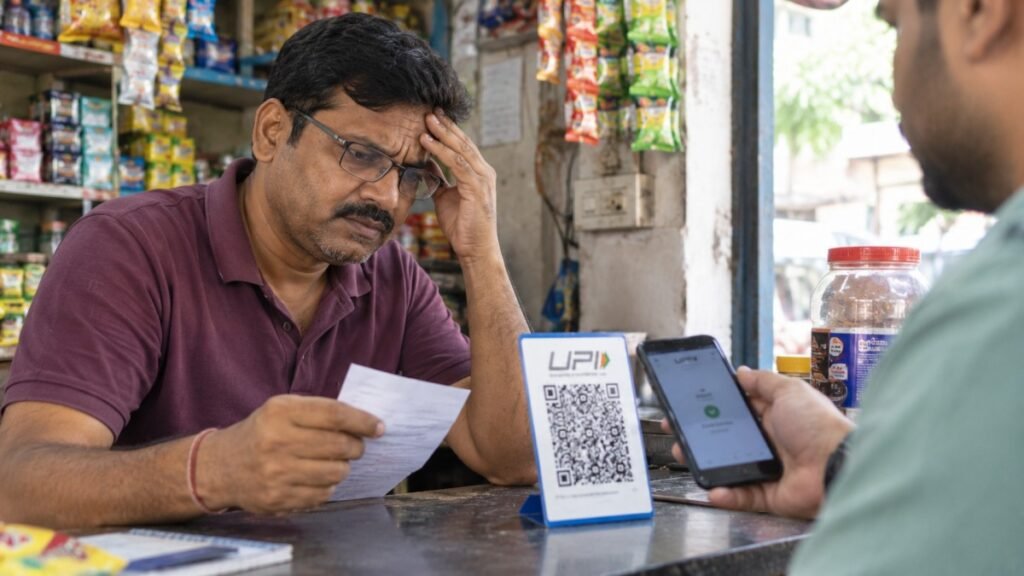
Merchant Discount Rate (MDR) is a processing fee charged to merchants for accepting digital payments. Under the announced framework, eligible person-to-merchant (P2M) transactions above ₹2,000 attract a 0.4% MDR. Understanding these UPI charges above ₹2000 is essential for evaluating overall business costs.
The original rollout was scheduled for 15 October 2026, but NPCI postponed it until after Diwali. The exact start date is still to be notified. So, references to UPI charges from 15 October 2026 describe the original schedule, not the confirmed implementation date.
The proposed eligibility/exemption rules are important:
- P2M transfers remain free.
- Merchant payments up to ₹2000 remain free.
- Small merchants authorising under the P2PM tier with monthly UPI receipts up to ₹1 lakh incur zero MDR
- The standard MDR is capped at ₹300 for transactions of ₹75,000 and above.
The exemption depends on your merchant classification, not simply your shop’s size. Check your status with your acquiring bank or payment provider. The Ministry of Finance FAQ explains the rules.
The UPI Charges Small Businesses Need to Watch
The standard rate isn’t the only one to consider. To have UPI 0.4% MDR explained clearly, note that the framework includes different rates for certain sectors.
| Transaction category | Proposed MDR |
| Eligible P2M payments above ₹2,000 | 0.4% |
| Railways, telecom, insurance, fuel and specified utilities above ₹2,000 | Flat ₹5 |
| Capital market payments | 0.02%, capped at ₹300 |
| P2P and exempt transactions | Nil |
These sector-specific rates matter if you run a fuel outlet, collect insurance premiums, or accept payments in a specialised category.
Furthermore, the transaction and threshold cap can change the final amount. For example, a ₹10,000 eligible retail payment attracts ₹40 MDR. A ₹1 lakh payment reaches the ₹300 cap rather than attracting ₹400.
How to Calculate UPI MDR
Let’s make the numbers practical. Suppose your shop receives 100 eligible UPI payments every month, each worth ₹5,000.
- Monthly eligible UPI collections: ₹5,00,000
- MDR at 0.4%: ₹2,000
- GST at 18% on MDR: ₹360
- Total processing cost before any eligible input tax credit: ₹2,360
This is how to calculate a simple monthly estimate step by step:
Eligible UPI collection x 0.004 = MDR
GST is calculated on the MDR, not on the entire customer payment. A GST-registered business may claim input tax credit if it meets the applicable conditions. If it cannot claim the credit, GST becomes an additional expense. Read the GST clarification reported by The Week for more context.
Don’t Look at MDR Alone: Calculate the Margin Impact
A ₹20 fee may seem insignificant. But what if your profit on that sale is only ₹300?
On a ₹5,000 transaction, 0.4% MDR costs ₹20. That’s around 6.7% of your ₹300 gross profit, before considering any unrecoverable GST.
This is how UPI charges affect small business owners with thin margins. A retailer selling groceries, stationery, or household essentials may feel the difference more than a business with higher margins.
UPI vs. Cash vs. Card: What Does Each Payment Method Cost?
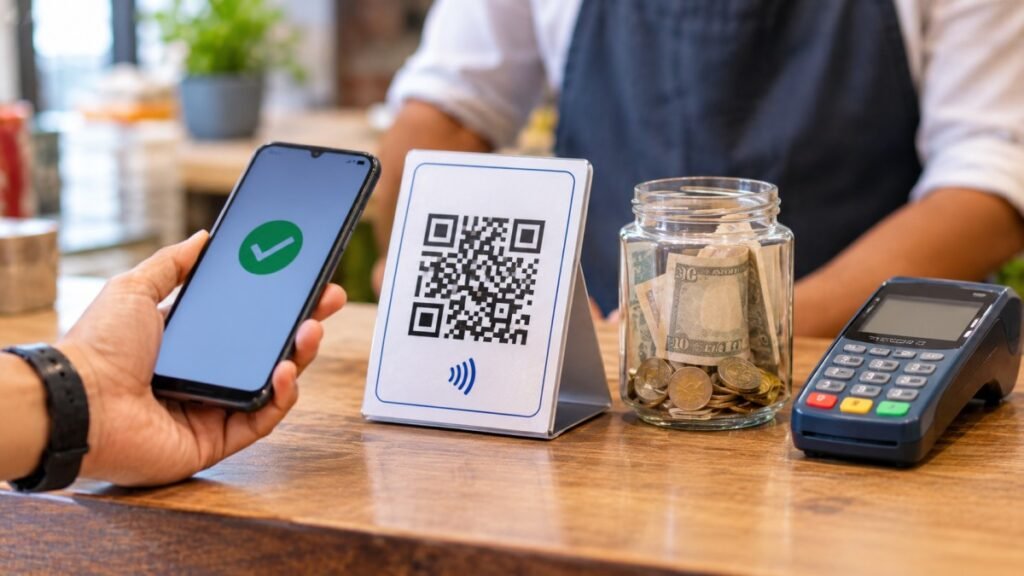
UPI isn’t automatically the cheapest option once MDR applies. Compare the costs you actually incur.
- UPI: Fast collections, easy reconciliation, and a proposed 0.4% MDR on eligible payments.
- Cash: No MDR, but handling, counting, depositing, security, and theft risks create costs.
- Cards: Convenient for customers, but merchant fees can be higher. The Finance Ministry FAQ cites typical credit card MDR of 1.5-2.5%.
Your comparison should include the hidden costs of running a business, not just the fee printed on a payment statement.
Considering all UPI payment charges for businesses creates a realistic budget. A sensible budgeting and saving plan can help you track payment expenses alongside other overheads.
5 Numbers Every Small Business Should Calculate Before MDR Applies
Before the new UPI charges for shopkeepers take effect, keep these 5 figures handy:
- Monthly eligible UPI collections: Separate transactions above ₹2,000 from exempt payments.
- Average transaction value: This helps estimate how often your payments may attract MDR.
- Monthly MDR and GST: Calculate the likely deduction and check whether you can claim input tax credit.
- Gross profit per sale: See how much of your margin the processing fee could consume.
- Payment method share: Compare UPI, cash, and card usage to understand your total acceptance cost.
These figures will help you analyze UPI transaction charges for merchants and make better decisions when reviewing other financial commitments, from tax reforms to your annual business budget.
What Small Businesses Can Do About the New UPI Charges for Merchants
You don’t need to stop accepting UPI. Instead, prepare before the framework takes effect.
- Ask your bank or payment provider to confirm your P2PM or P2M classification.
- Review monthly UPI statements and identify eligible transactions.
- Check how MDR and GST will appear in settlement reports.
- Compare payment provider terms and reconciliation charges.
- Update your accounting records so payment fees are not mistaken for sales losses.
Don’t add an MDR surcharge to customer bills. The framework says merchants cannot pass the fee on to buyers. Also, remember that personal financial planning matters alongside business planning, especially with the new Union Budget. Protecting your family with suitable term insurance is a separate decision, but it belongs in the wider picture of managing financial risk.
UPI remains a useful way to collect payments. The key is knowing what accepting it costs your business. Check your eligibility, understand the applicable rate, and calculate the effect on your margins before making changes. A little preparation can help you protect your earnings without making payments harder for customers.
FAQs
1. Can merchants pass UPI charges to customers?
No. Regulatory guidelines and the National Payments Corporation of India (NPCI) explicitly state that merchants are prohibited from passing on MDR or payment-processing costs to customers. Doing so violates compliance rules and can attract regulatory action.
2. Does the ₹2,000 UPI limit apply per transaction or per day?
Neither. The ₹2,000 threshold isn’t a customer transaction limit or daily cap on how much money you can send or pay. Instead, it’s an MDR threshold per transaction. P2M transactions up to ₹2,000 are entirely free from MDR. Eligible regular merchant transactions above ₹2,000 may attract a standard 0.4% MDR (capped at ₹300 for transactions of ₹75,000 and above), while small merchants under the Person-to-Person-Merchant (P2PM) framework remain exempt even for transactions exceeding ₹2,000.
3. Can businesses claim GST input tax credit on UPI MDR?
Yes, but with conditions. The processing fee (MDR) attracts an 18% GST charge. Regular GST-registered businesses making taxable supplies can claim this GST as an Input Tax Credit (ITC), subject to maintaining proper tax documentation and normal ITC eligibility rules. However, composition taxpayers and businesses operating in exempt sectors cannot claim regular ITC on this charge.
4. Should small businesses continue accepting UPI if MDR is introduced?
For the vast majority of small vendors and micro-retailers, daily customer collections will continue to be free. Eligible small businesses under the P2PM tier with monthly UPI collections up to ₹1 lakh incur zero MDR. However, small businesses need to evaluate the cost carefully when making outbound payments to suppliers for large wholesale purchases, where thresholds might trigger processing costs.
5. Will UPI charges increase the cost of doing business?
For businesses that frequently process higher-value customer transactions (above ₹2000) or high-volume B2B vendor payments, the introduction of 0.4% MDR plus 18% GST on that fee adds an incremental operational cost. While individual transaction fees are small (e.g., ₹40 on a ₹10,000 transaction, capped at ₹300 for transactions over ₹75,000), they can accumulate for businesses operating on thin profit margins.


Amilia Brown is a seasoned business writer & strategist who simplifies complex business concepts and turn them into engaging narratives. As a trusted business writer, she delivers actionable insights with precision.




 Indian CEOs in America: A Detailed Account of the Masterminds
 Add Boosters to Your Business Wheels in 2025 with These 5 Strategies
 6 Skills Every Business Leader Should Possess and Hone
 The Vital Role Of Plastic Tubing In Our Medical Infrastructure
 Why Treating Your Employees like Assets and Investing in Them is a Good Idea