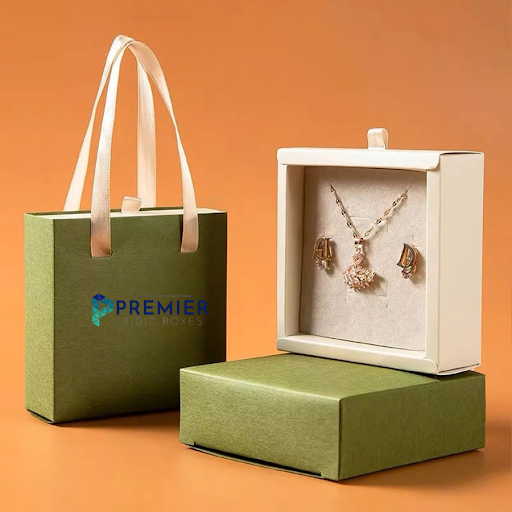
Jewelry is one of those product categories where storage problems don’t show up until it’s too late to fix them easily. A necklace tangles into a knot that takes ten minutes to undo. A ring picks up a hairline scratch from rubbing against another piece. An earring goes missing because nothing was keeping the pair together. None of this is dramatic damage, but it adds up to a customer experience that feels careless — and much of it traces back to packaging that wasn’t designed around how jewelry behaves in storage, not just how it looks in a photo.
Why Jewelry Storage Fails More Often Than People Expect
Most jewelry damage isn’t caused by a single hard impact. It’s slow and cumulative — friction between pieces, repeated small movements inside a box, or chains that had room to shift and loop around themselves. Generic storage solutions, whether it’s a plain pouch or an unstructured box, don’t prevent any of that. They just contain the product without controlling how it moves inside the container.
The core issue is that jewelry pieces interact with each other as much as they interact with their packaging. A ring resting against a pendant, or two chains sharing the same compartment, creates contact points that generic packaging simply doesn’t account for. Solving that requires packaging built around specific problems, not just a box that happens to be the right size.
The Most Common Storage Problems, and What Actually Causes Them
Chain tangling. This is almost always a space problem, not a chain problem. Any chain given enough room to move inside a container will eventually loop around itself, especially after multiple handling events such as shipping, restocking, and customer transport. The fix isn’t a bigger compartment — it’s a smaller, more controlled one that limits how much the chain can shift.
Surface scratches. Scratches usually come from contact between two jewelry pieces, or between a piece and an abrasive interior surface. Metal-on-metal contact is the most common cause, but even fabric linings that are slightly too coarse can create fine surface marks over repeated handling.
Clasp and closure damage. Delicate clasps and closures can bend or snap if a piece is packed in a position that applies pressure directly to the hardware rather than to the main body. This is a common oversight in generic inserts that weren’t designed with clasp placement in mind.
Lost or separated pairs. Earrings and cufflinks are especially prone to this — without a dedicated cavity for each piece, sets get separated inside a shared compartment, and a missing half is a common complaint even when nothing was technically lost.
Tarnishing from trapped moisture. Less obvious than physical damage, but real — packaging that traps humidity accelerates tarnishing on silver and certain plated metals, especially during longer storage or shipping periods.
How Cardboard Box Design Solves Each Problem
Structured cardboard boxes address most of these issues directly, provided the interior is actually engineered around them rather than treated as an afterthought to the box’s exterior design.
| Storage Problem | What Causes It | How Structured Cardboard Packaging Solves It |
| Chain tangling | Excess room to move inside the container | Fitted chain channels or ridges that hold the chain in a fixed path |
| Surface scratches | Metal-on-metal or abrasive-surface contact | Individual cavities with soft, non-abrasive linings (velvet, felt) |
| Clasp/closure damage | Pressure concentrated on delicate hardware | Insert design that positions the clasp in open space, not against a wall |
| Lost or separated pairs | Shared compartments with no fixed placement | Dedicated dual cavities that keep pairs matched and secure |
| Tarnishing | Trapped moisture in sealed or non-breathable packaging | Breathable, uncoated cardboard stock that doesn’t trap humidity |
The common thread across all of these fixes is the same principle: control movement, control contact, control moisture. A box that gets only one or two of these right will still leave room for a specific type of damage to occur.
Why Cardboard Specifically Works Well for This
Cardboard, especially uncoated or lightly finished stock, has a few advantages over plastic- or metal-based jewelry packaging that are particularly relevant to storage-related problems. It’s breathable, which reduces the risk of tarnishing associated with sealed plastic packaging. It handles precise die-cutting well, making custom cavity shapes for rings, chains, and earring pairs realistic to produce at scale rather than only as one-off custom work. And it’s significantly cheaper to produce at volume than rigid metal tins or molded plastic cases, which matters a lot for retailers trying to offer good packaging across an entire product line rather than just a handful of premium SKUs.
That affordability is a big part of why demand for affordable custom cardboard jewelry boxes in USA has grown steadily among small and mid-size jewelry retailers, it’s one of the few packaging categories where lower cost doesn’t automatically mean worse protection, as long as the interior structure is actually designed with intent rather than just scaled down from a generic template.
When Rigid Construction Makes More Sense
In the case of high-value jewelry (such as fine jewelry, loose gemstones or internationally shipped jewelry over long distances), structured cardboard works well for most jewelry storage needs, but rigid box construction offers a higher level of protection than cardboard alone. Rigid boxes are sufficiently rigid to withstand high pressures from stacking and repeated handling, but even well-made cardboard boxes can eventually fail, especially if they are intended for long-term storage.
Brands that require this additional structural envelope are generally better suited to a manufacturer that specializes in rigid box construction, like Premier Rigid Boxes, whose packaging would serve a long-term storage function beyond shipping and delivery anyway.
The Bottom Line
Most jewelry storage complaints trace back to the same handful of causes: too much room to move, unprotected contact points, and packaging that wasn’t designed around how pairs and chains actually behave. Solving that doesn’t require expensive materials. It requires packaging that was actually engineered around these specific failure points, whether that’s affordable structured cardboard for everyday pieces or rigid construction for higher-value ones. Get the interior design right, and most of the everyday storage problems customers run into simply stop happening.


Amilia Brown is a seasoned business writer & strategist who simplifies complex business concepts and turn them into engaging narratives. As a trusted business writer, she delivers actionable insights with precision.



 Indian CEOs in America: A Detailed Account of the Masterminds
  Add Boosters to Your Business Wheels in 2025 with These 5 Strategies
  The Vital Role Of Plastic Tubing In Our Medical Infrastructure
  6 Skills Every Business Leader Should Possess and Hone
  Why Treating Your Employees like Assets and Investing in Them is a Good Idea