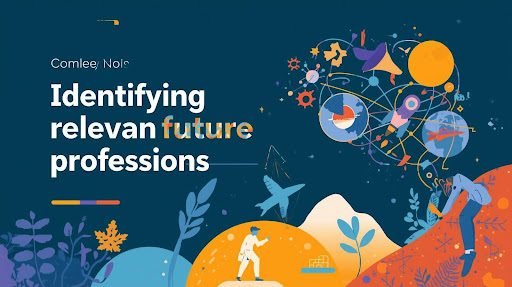
The professional world is no longer a static landscape where a single degree guarantees a forty-year career. We are living through a period of “Great Re-skilling,” driven by rapid advancements in artificial intelligence, a global shift toward sustainability, and the total transformation of traditional industries. Identifying a “future-proof” profession isn’t just about picking a trending job title; it’s about understanding the underlying forces of change and aligning your unique value with the needs of tomorrow.
To navigate this uncertainty, professionals must move from being passive observers to active architects of their career paths. Here is a comprehensive guide on how to identify, evaluate, and transition into the professions that will define the next decade.
1. Analyze the Drivers of Change
Before looking at specific jobs, you must understand why the market is shifting. Most future professions are being birthed at the intersection of three major drivers:
Technological Integration (AI and Automation)
Automation isn’t just replacing manual labor; it is augmenting cognitive tasks. Future professions will favor those who can “bridge” the gap between human intuition and machine efficiency. Roles in AI ethics, data storytelling, and algorithmic auditing are emerging as critical pillars in every sector.
The Green Economy
As nations strive for net-zero targets, entire industries are being rebuilt. Beyond renewable energy technicians, we are seeing a surge in demand for sustainability consultants, circular economy architects, and green finance specialists.
The Longevity Economy
With aging populations in developed nations, the healthcare sector is expanding far beyond traditional roles. This is creating a demand for geriatric care managers, biotech researchers, and specialists in personalized medicine.
2. Shift from “Job Titles” to “Skill Clusters”
In the future, your value won’t be defined by your title, but by your “skill cluster”—a unique combination of technical abilities and durable soft skills. To identify a relevant profession, look for roles that require:
- Complex Problem Solving: Tasks that involve high levels of ambiguity that AI cannot yet navigate.
- High-Stakes Empathy: Roles in healthcare, leadership, and negotiation where human connection is the primary value.
- Systems Thinking: The ability to see how different parts of a business or ecosystem interact.
3. Utilize Market Intelligence Tools
You don’t have to guess where the market is going. Use data to validate your direction:
- Look at Venture Capital (VC) Flows: Where is the money going? If VCs are pouring billions into “Climate Tech” or “EdTech,” those industries will be hiring aggressively in 24 to 36 months.
- Analyze Job Board Metadata: Look for “emerging keywords” in job descriptions for high-paying roles. If you see a sudden spike in “Prompt Engineering” or “ESG Compliance,” you’ve found a signal.
- Consult Professional Benchmarks: In specific regions, standards vary. For instance, looking at the top-tier CV Ireland experts produce can show you which certifications and achievements are currently being prioritized by recruiters in the European tech and pharma hubs.
4. The “Adjacent Possible” Strategy
Most successful career pivots aren’t radical leaps; they are moves to the “adjacent possible.” This involves taking your existing expertise and applying it to a growing field.
- Example: A legal professional doesn’t need to become a coder to stay relevant; they can transition into AI Privacy Law.
- Example: A traditional marketing manager can pivot into Ethical Data Advocacy.
By staying close to your core strengths while adding a “future-focused” layer, you minimize risk while maximizing relevance.
5. Professional Presentation in a Modern Market
Identifying a future profession is only half the battle; you must also be able to communicate your relevance to that new field. The way you presented yourself five years ago is likely obsolete today.
The Executive Pivot
For those at the leadership level, the transition requires a narrative shift. It’s no longer about managing people; it’s about leading transformation. Many leaders seek the best executive CV writing services to help them translate legacy experience into a language that resonates with future-forward boards and tech-driven enterprises.
The Specialized Pivot (Healthcare and Science)
In sectors like medicine, the shift toward digital health and genomics is profound. To stand out, practitioners must showcase their adaptability. Utilizing the best Medical CV writing services ensures that your technical proficiency is balanced with your “future-readiness”—such as experience with telehealth platforms or robotic surgery systems.
6. Conduct “Micro-Experiments”
Before committing to a total career overhaul, test the waters. Identifying a relevant profession should involve low-cost, high-information experiments:
- Informational Interviewing: Speak to three people currently doing the job you think is the “future.” Ask them about their biggest daily frustrations not just the highlights.
- Shadowing/Freestyling: Offer to help a startup in that space with a specific project over a weekend.
- Certifications: Complete a high-signal certification (e.g., AWS, Google Data Analytics, or a specialized ESG course) to see if the subject matter actually engages you.
7. The Role of Continuous Branding
In a world of shifting professions, your “personal brand” is your only permanent asset. Your LinkedIn profile, your portfolio, and your CV are the evidence of your evolution.
If you are based in a competitive hub, your documentation needs to reflect international standards. A high-quality CV Ireland benchmark ensures you are optimized for Applicant Tracking Systems (ATS) while still maintaining a human-centric narrative that appeals to modern recruiters who value potential over just past performance.
Conclusion:
The most relevant profession of the future is the one that hasn’t been fully defined yet. By adopting a “permanent beta” mindset—where you are constantly testing, learning, and refining your skill set you become immune to the volatility of the job market.
Identify the drivers of change, map your skill clusters, and ensure your professional presentation from your executive summary to your specialized certifications is sharp enough to cut through the noise of a crowded, shifting market.


Amilia Brown is a seasoned business writer & strategist who simplifies complex business concepts and turn them into engaging narratives. As a trusted business writer, she delivers actionable insights with precision.



 Add Boosters to Your Business Wheels in 2025 with These 5 Strategies
 - 6 Skills Every Business Leader Should Possess and Hone
- Indian CEOs in America: A Detailed Account of the Masterminds
- The Vital Role Of Plastic Tubing In Our Medical Infrastructure
- Demonetization and Its Effect on Indian Financial Ecosystem


