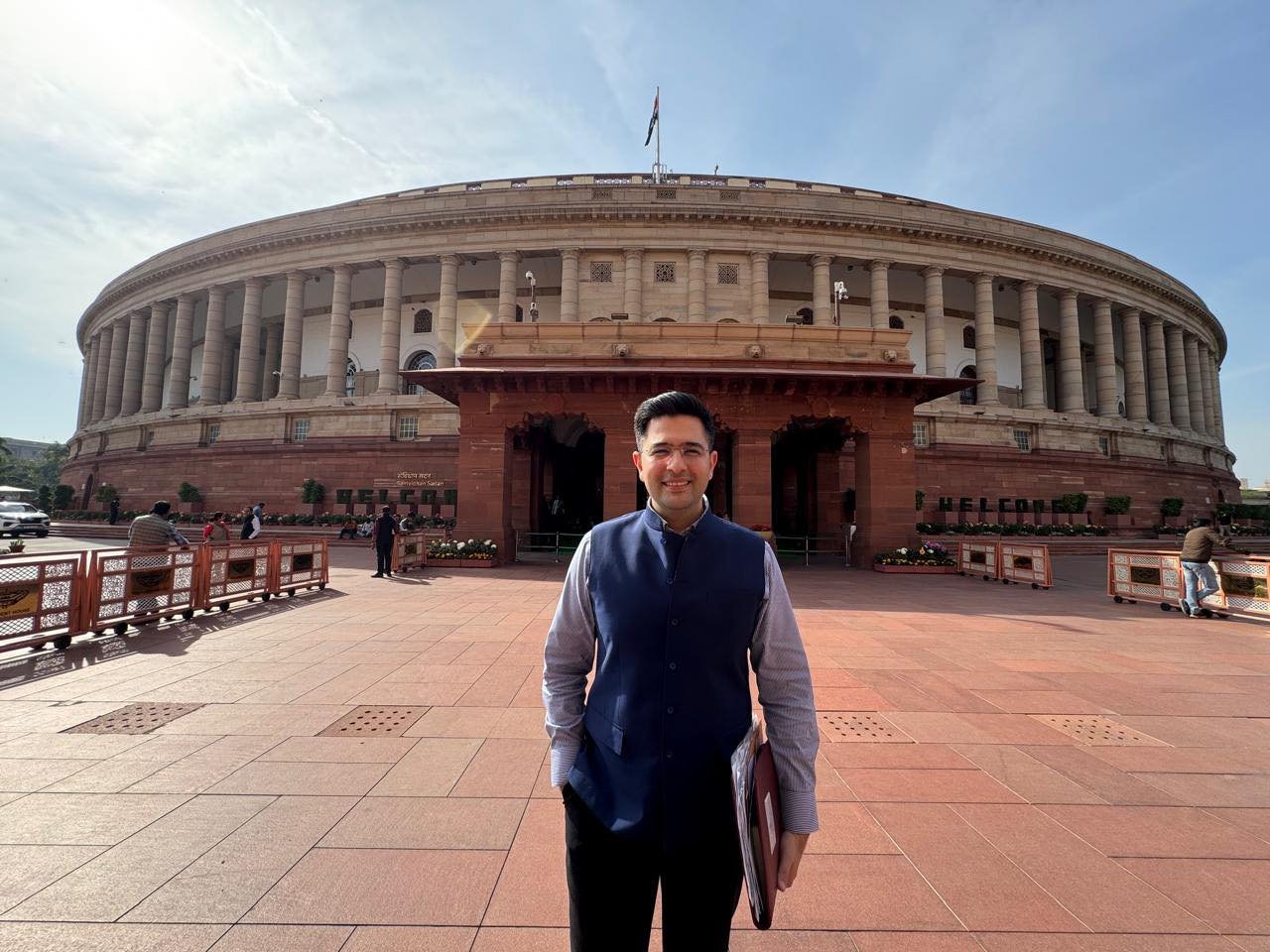
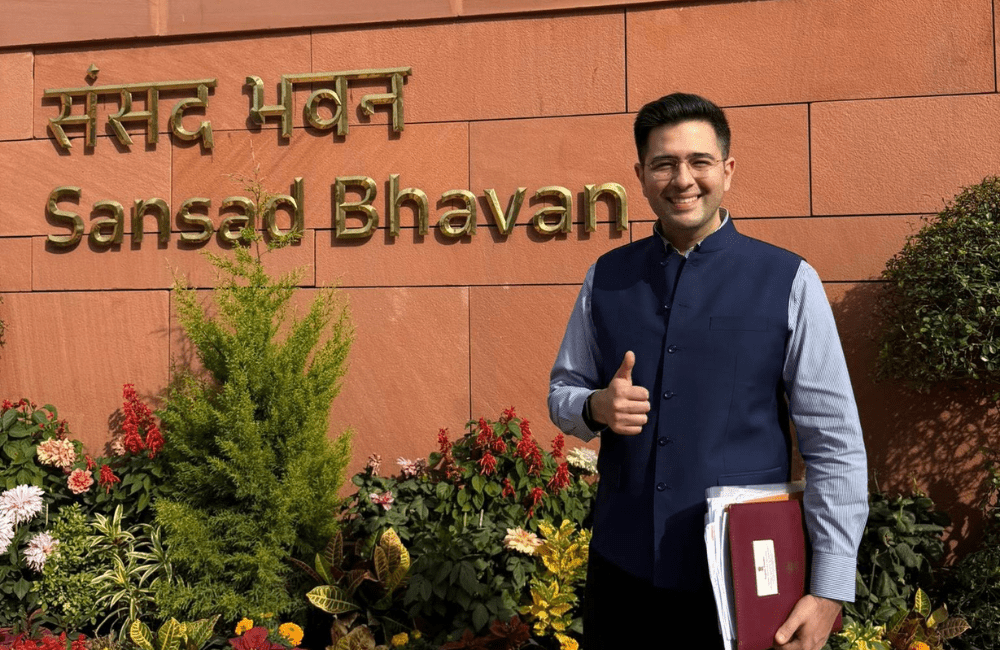
When most politicians talk about the Union Budget, it usually turns into either full praise or outright criticism. But Raghav Chadha took a different route in his 2026 Budget speech.
He called it “The Good, The Bad, and The Way Forward.”
That framing matters because instead of just reacting politically, he broke the budget down as a financial analyst would. He highlighted what works, what doesn’t, and what needs fixing.
If you’re someone who cares about taxes, investments, or the broader economy, his insights are worth understanding. Let’s unpack the key points of Raghav Chadha’s Union Budget speech 2026.
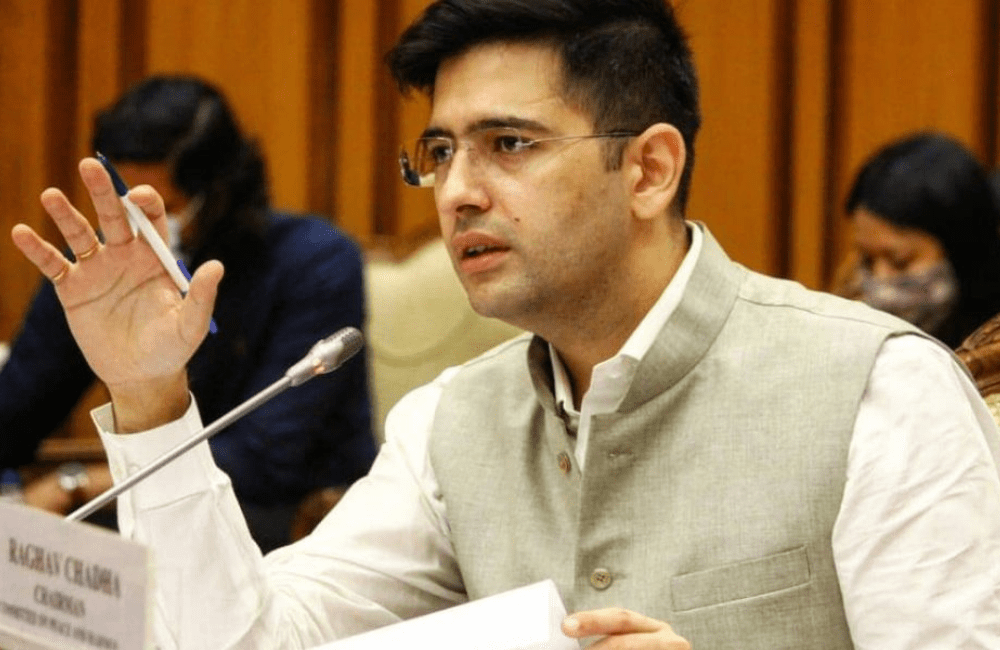
The Big Picture: A Balanced but Critical View
In Raghav Chadha’s Union Budget speech 2026, he focused on three things:
- Encouraging long-term economic growth.
- Reducing pressure on the middle class.
- Making policies more transparent and practical.
In Raghav Chadha’s objective budget analysis, he appreciated some structural decisions. But, he also pointed out gaps that directly affect everyday taxpayers.
Key Takeaways From the Budget Debate
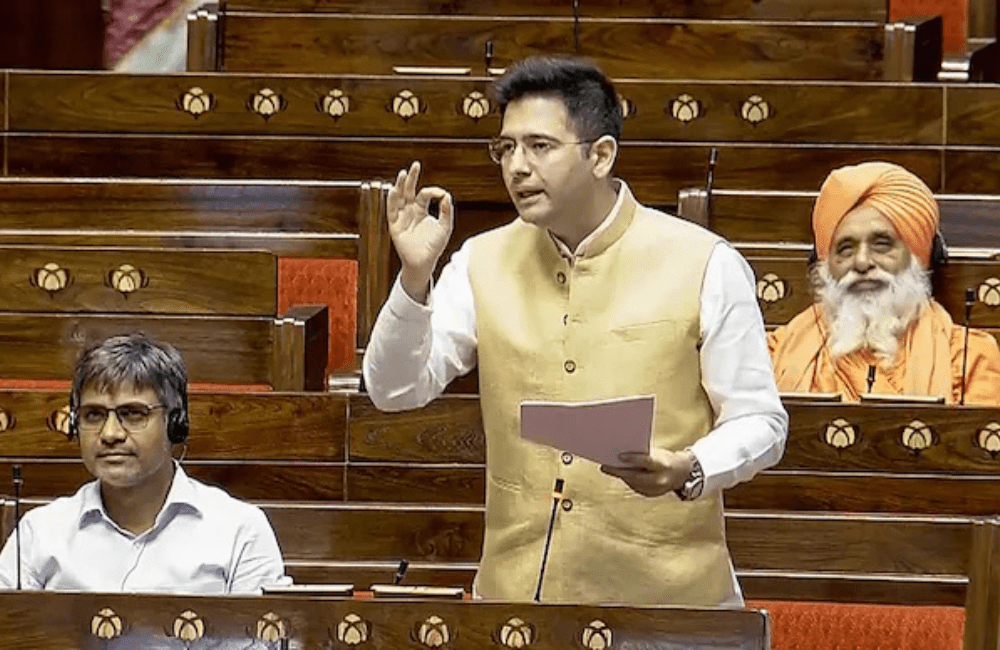
What’s Working in Budget 2026
Let’s start with the positives he highlighted.
- Higher Capital Expenditure is a Strong Move
One of the biggest positives, according to Chadha, is the government’s push on infrastructure spending.
Capital expenditure has grown significantly over the years, reaching around ₹12 lakh crore. This matters because:
- Infrastructure creates jobs.
- It boosts long-term productivity.
- It attracts private investment.
Think of it as building the backbone of the economy. However, he also suggested that the government should provide a “clear 5-year roadmap” so businesses can plan better.

- STT Hike on Derivatives is a Step Toward Safer Markets
One of the highlights of Raghav Chadha’s budget speech was his support for increasing Securities Transaction Tax (STT) on derivatives trading. His reasoning was simple:
- Most retail investors lose money in futures and options.
- Speculation is often mistaken for investing.
By making speculative trading slightly more expensive, the move could protect small investors. But he raised an important counterpoint—if STT exists, then long-term capital gains tax on equities should ideally be removed to avoid double taxation.

- Increased NRI Investment Limits
Another positive highlighted in Raghav Chadha’s Union Budget speech 2026 was the easing of investment limits for NRIs.
India has a massive diaspora—over 30 million people globally. Unlocking this capital can:
- Strengthen markets
- Improve liquidity
- Offset foreign investor outflows
Still, he cautioned that this alone won’t fix the deeper issue of why foreign investors are pulling money out.
- Less Populism in Budget Announcements
Interestingly, Chadha appreciated the restraint in election-driven promises.
Budgets often include schemes designed to win votes rather than build long-term value. This time, he noted a shift toward more measured and policy-driven decisions, which is a good sign for economic stability.
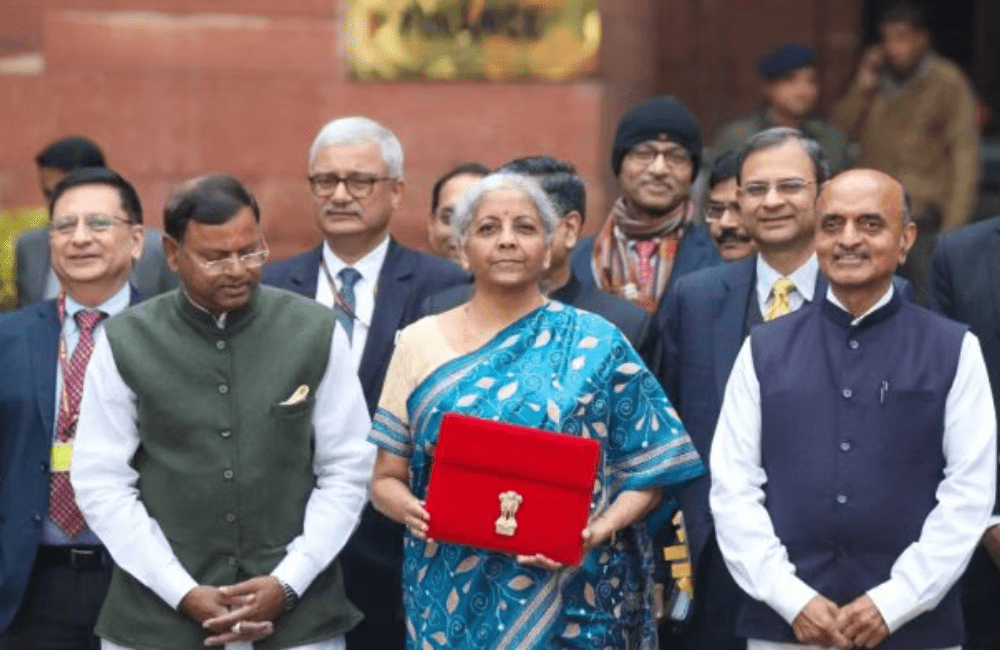
Where the Budget Falls Short
Now let’s discuss the concerns he raised—these are especially relevant if you’re a salaried individual or investor.
- Hidden Tax Traps for the Middle Class
One of the strongest criticisms in Raghav Chadha’s Union Budget speech 2026 was the tax burden on the middle class.
Personal income tax collections are now higher than corporate tax. Yet, there was no major relief in tax slabs, and the standard deduction remains unchanged. At a time of rising inflation, this creates real pressure on disposable income.
His argument is straightforward: the middle class is paying more but getting less in return.
- Debt and Fiscal Transparency
In the Raghav Chadha Union Budget speech 2026, he also questioned the official debt numbers.
While the government reports a certain debt-to-GDP ratio, he pointed out that off-budget borrowings are often excluded, and including them raises the real debt significantly. This raises concerns about transparency and the sustainability of long-term fiscal consolidation plans.
- Low Healthcare Spending
Healthcare was another area where he felt the budget fell short. Despite some increases in allocation, spending is still around 2% of total expenditure, and it remains below the target of 2.5% of GDP.
In a post-pandemic world, this is a critical gap. Strong healthcare systems are economic safeguards and not just social investments.
- No Immediate Relief for Households
Chadha emphasized that while the budget focuses on long-term growth, it ignores short-term financial stress in the rise of India’s EMI economy.
For most families, costs are rising, EMIs are high, and education and healthcare expenses are increasing. Without direct relief, long-term promises may not feel meaningful in daily life.
The Way Forward: Practical Solutions He Proposed
This is where the AAP leader’s budget response stands out. He offered solutions along with his criticisms.
- Zero Long-Term Capital Gains (LTCG) Tax on Equities
To encourage investment in financial markets, he proposed removing the LTCG tax for individuals. This could boost stock market participation and shift savings from gold/real estate to equities. It would also support economic growth.
- Blockchain-based Land Records
Land disputes account for a huge portion of court cases in India. His solution includes a blockchain-powered land registry. The benefits of this include:
- Tamper-proof records
- Faster dispute resolution
- Greater transparency
- Inflation-Linked Salary System
He proposed an Inflation-Linked Salary Revision Act. This means salaries would automatically adjust with inflation. It matters because:
- Protects real income
- Supports consumption
- Reduces financial stress
- Regulating Crypto Instead of Ignoring It
On digital assets, his stance was clear: don’t ban but regulate.
Currently, crypto is taxed heavily but lacks proper legal recognition. This has pushed trading activity offshore. He suggested clear regulations, investor protection frameworks, and bringing activity back to India. This could even increase tax revenue significantly.
What This Means For You
Raghav Chadha’s Parliament speech 2026 is important because it bridges the gap between policy and personal finance. Here’s the takeaway:
- The government is focused on long-term growth.
- Short-term financial relief is limited.
- Structural reforms are needed to balance both.
So, if you’re investing, policy stability is a positive. Tax pressure remains a concern if you’re salaried. Also, if you’re planning long-term, reforms could shape future opportunities.
His closing message was simple but powerful:
A budget should not just manage numbers—it should improve people’s financial lives.
And that’s the lens you should use when evaluating any budget going forward.
FAQs
1. Which of the following budgets is not presented in the Rajya Sabha?
The budget not presented in the Rajya Sabha is the Union Budget, as Money Bills, including the Finance Bill and Appropriation Bill, can only be introduced in the Lok Sabha. The Rajya Sabha can discuss and suggest changes, but it cannot initiate or reject the budget.
2. Which one is not the objective of the government budget?
Reallocation of resources isn’t typically considered an objective, but rather a tool. Key objectives include economic growth, reducing income inequality, price stability, and employment generation.
3. What are the three major objectives of a government budget?
Three major objectives of a government budget are:
- Resource Allocation: Allocating resources for public goods and services.
- Redistribution of Income: Reducing income inequality through taxes and welfare programs.
- Economic Stability: Managing inflation, unemployment, and growth.
4. Will a recession hit India in 2026?
India is unlikely to face a recession in 2026, with strong economic growth projected at 6.5-7.5% GDP growth. The country’s robust domestic demand, supportive government policies, and healthy foreign exchange reserves are contributing factors. However, external risks like global economic slowdowns, US tariffs, and trade uncertainties could impact growth.
5. Which sector will boom in 2026 in India?
India’s booming sectors in 2026 are expected to be:
- Renewable energy
- Electrical vehicles
- Technology and IT (driven by AI)
- Healthcare and pharmaceuticals
- Fintech


Amilia Brown is a seasoned business writer & strategist who simplifies complex business concepts and turn them into engaging narratives. As a trusted business writer, she delivers actionable insights with precision.


 Add Boosters to Your Business Wheels in 2025 with These 5 Strategies
 - 6 Skills Every Business Leader Should Possess and Hone
- Indian CEOs in America: A Detailed Account of the Masterminds
- The Vital Role Of Plastic Tubing In Our Medical Infrastructure
- Demonetization and Its Effect on Indian Financial Ecosystem


