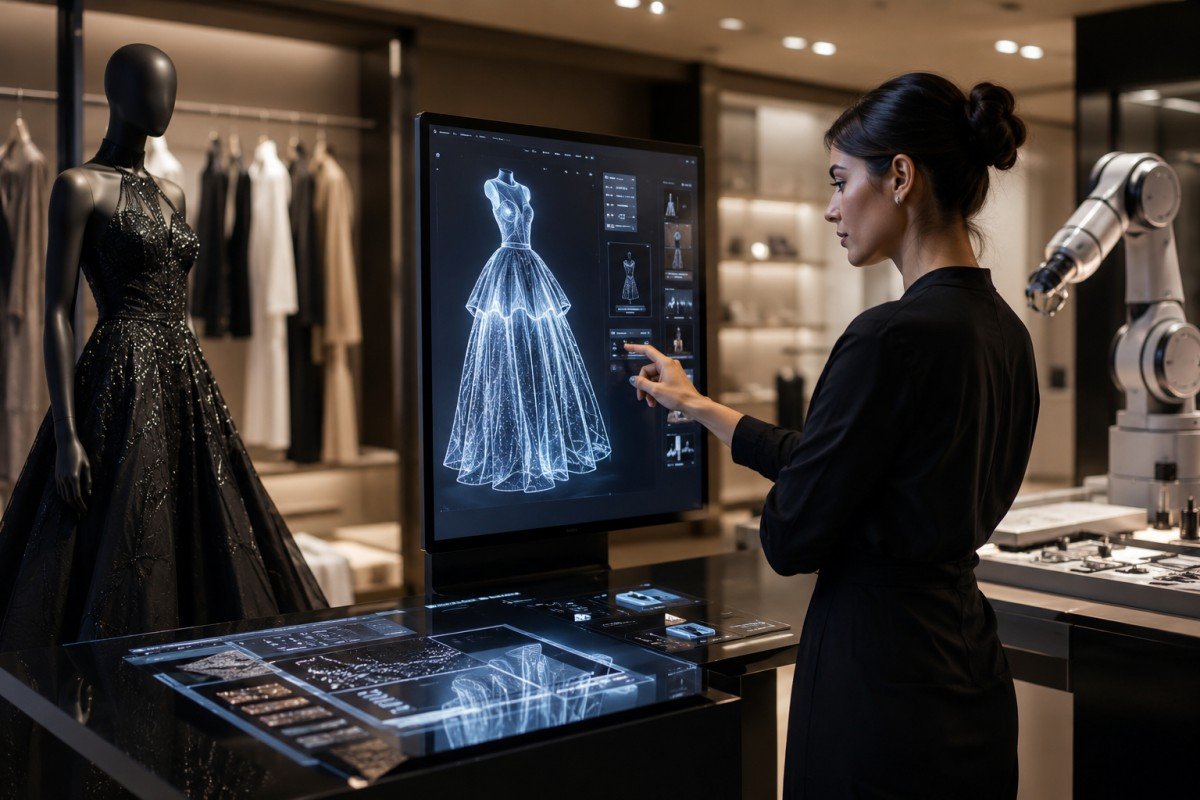
Luxury fashion companies are also using AI to optimize social media content and improve customer engagement across digital platforms. As a result, AI is becoming a powerful tool for driving brand visibility, customer loyalty, and long-term business growth.
As consumer expectations evolve, AI is becoming a key tool for delivering premium shopping experiences and long-term business growth, keeping exclusivity and diversity as the main criteria.
Luxury fashion marketing has always been associated with craftsmanship and personalized customer experiences. Artificial Intelligence (AI) is transforming the luxury fashion industry by helping brands understand customer preferences and enhance sales strategies without compromising their brand image.
Growing Of AI In Luxury Fashion

From personalized shopping experiences to predictive analytics, AI is redefining how luxury brands engage with modern consumers. AI-generated luxury fashion campaigns are creating new and improved customer loyalty and satisfaction.
AI-generated fashion content enables brands to analyze vast amounts of customer data and identify buying patterns. AI also helps luxury companies make smarter business decisions by providing valuable insights into consumer behavior, market trends, and inventory management.
However, according to Luca Solca, Senior Research Analyst at Bernstein, technology should improve the luxury industry instead of replacing it.
This opinion perfectly reflects how luxury brands are approaching AI. Rather than replacing creativity and craftsmanship, AI is helping brands better understand customer preferences while maintaining their unique identity.
The leading fashion houses are using AI not only to increase sales and improve operational efficiency but also to build stronger relationships with their customers across digital and physical touchpoints. This, in turn, helps in getting a strong hold of the customer and their choices in the field of competition.
Personalized Shopping Experiences
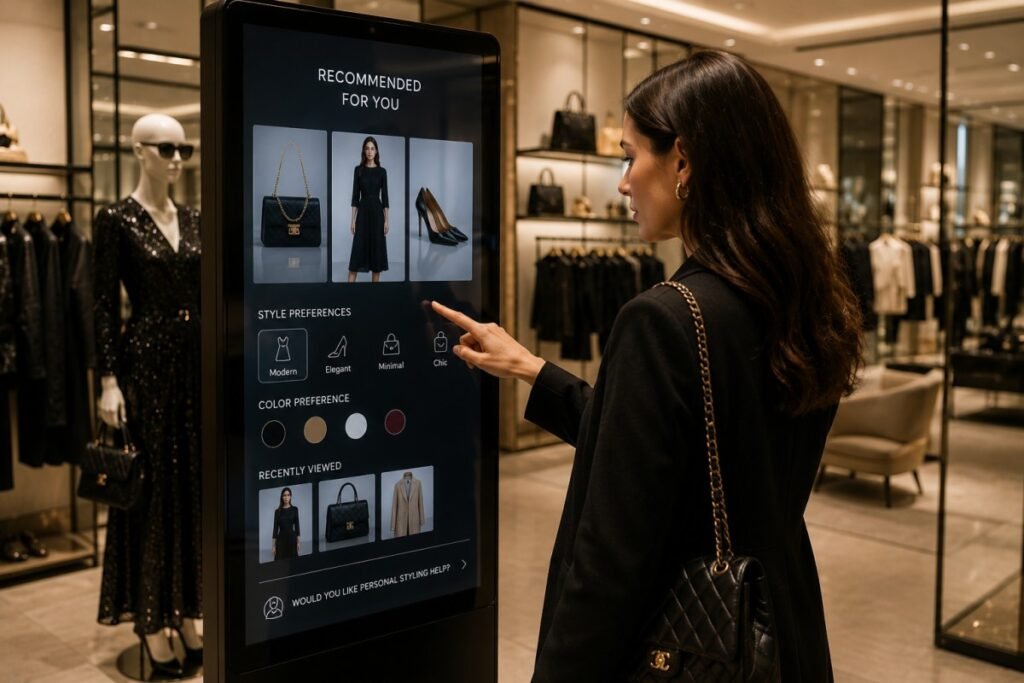
One of the most significant applications of AI in luxury fashion is personalization. AI can identify the types of content one plans to watch. This acts as a marketing strategy for fashion brands. AI-powered algorithms analyze browsing history and customer preferences to recommend products that align with individual tastes.
Instead of simply displaying generic product catalogs, luxury brands can showcase curated collections based on a shopper’s interests. Many AI-generated luxury fashion campaigns focus on studying personalized experiences. This level of personalization helps create a boutique-like experience in the digital space, increasing engagement and conversion rates.
According to a report by McKinsey & Company, companies that successfully implement AI in marketing and sales can improve revenue growth while enhancing customer engagement.
AI-Generated Marketing Content

AI is increasingly assisting marketing teams with content creation. From product descriptions to social media captions and ad copy, virtual shopping assistants help brands produce content faster and with accuracy.
Luxury brands can use AI-generated insights to determine which content formats, messaging styles, and visual elements resonate most with their audience. This is considered a fashion brand marketing strategy to get spot-on results.
Case Study
Gucci uses AI to predict fashion trends. They also analyze vast amounts of customer data, social media activity, and runway looks to predict emerging fashion trends with precision. By transforming raw digital insights into actionable forecasting, the luxury house can anticipate consumer preferences, optimize inventory management, and design highly targeted, culturally resonant marketing campaigns.
AI-Generated Campaign
Gucci started a campaign,” Primavera”. Rather than launching a traditional photoshoot with human photographers and models, Gucci flooded its official social media grids with realistic, surreal imagery explicitly tagged as created with AI. Although there were public backlashes, marketing experts noted the campaign succeeded as a high-powered attention engine.
The AI-powered merchandising made the campaign a massive traffic driver. Although surrounded by negativity, the campaign’s record-breaking comment volumes and shares spoke louder.
Luxury brands are increasingly adopting AI, not to replace their heritage, but to push for innovation in the luxury industry.
Strengthening Customer Loyalty
Customer retention is particularly important in the luxury fashion sector. Customer loyalty and satisfaction also play an integral part. AI helps brands identify loyal customers. This is a part of luxury fashion brand marketing.
Using these insights, companies can create personalized loyalty programs, exclusive offers, and tailored communications that strengthen long-term relationships.
Case Study
Chanel leverages customer insights and digital tools to deliver personalized shopping experiences. Digital transformation in luxury retail is creating a sense of customers’ understanding and preferences. As a result, the brand creates a sense of exclusivity and belonging that strengthens customer loyalty and encourages long-term engagement.
| Consumer Group | Expected Influence on the Luxury Market |
| Gen Z | Highest growth driver |
| Millennials | Major luxury spending segment |
| Gen X | Stable premium buyers |
Chat boxes and Virtual Chat Technologies
Luxury fashion brands are increasingly adopting AI-powered chatbots and virtual technologies to deliver seamless customer experiences. Luxury fashion technology stacks can answer product-related queries, provide personalized recommendations, and offer styling assistance in real time.
Luxury fashion technology is evolving. Virtual shopping assistants and AI-driven services help customers navigate collections and make informed purchasing decisions without visiting a physical store.
This has made the decision-making factor much easier for the customers. By offering support, luxury brands can enhance customer satisfaction, strengthen engagement, and maintain the premium service standards that consumers expect.
Revenue & Business Impact
Research says that AI is proving to be more than just a customer experience tool—it is becoming a measurable growth engine for luxury retail. It not only helps customers with their choices, but it also enhances the customer’s relationship with the brand. Customer experience management accounts for 27.6% of AI-related revenue in the luxury retail market, reflecting the industry’s strong focus on personalization and client engagement.
Key Benefits of an AI Luxury Fashion Brand
| Business Area | How AI Helps |
| Customer Experience | Delivers personalized recommendations and services. |
| Marketing | Creates targeted campaigns based on customer behavior. |
| Sales | Improves purchase decisions. |
| Trend Prediction | Identifies emerging fashion trends early. |
| Customer Loyalty | Helps brands build long-term relationships with shoppers. |
| E-Commerce | Enhances online shopping through virtual assistants and personalization. |
The Future Of AI in Luxury Fashion
As AI technology continues to evolve, luxury fashion brands are finding innovative ways to integrate it into their business strategies. From hyper-personalization in luxury retail to every fabric stimulation, AI does it all. Beyond marketing automation, AI is expected to play a major role in trend forecasting, virtual shopping experiences, product development, and customer relationship management.
Case Study
Louis Vuitton has embraced AI through personalized product recommendations and enhanced customer service tools. By gathering insights from purchase history and customer interactions, it delivers highly personalized recommendations and shopping experiences.
Online Experience
These strategies not only help brands to build their brand visibility but also strengthen customer engagement while maintaining their luxury appeal.
Louis Vuitton deploys internal AI agents to assist its physical store advisors. In this way, the brand’s popularity is also maintained. It aims to create an online experience that is exclusive and transparent at the same time. By analyzing consumer preferences, the brand can offer tailored suggestions that improve the shopping journey and increase customer satisfaction.
The long-term success will depend on how effectively brands balance innovation with authenticity, privacy, and values. Companies that use AI responsibly to deliver meaningful, personalized experiences while preserving brand heritage and customer trust will be best positioned to thrive in an increasingly competitive digital marketplace.
Brands that successfully combine innovation with authenticity to attract younger consumers and strengthen customer loyalty.
AI with luxury fashion tends to improve the artistic endeavour of the brand. The future of luxury fashion is not about replacing human creativity with technology—it is about using AI to elevate customer experiences and redefine what modern luxury looks like. If you are interested in luxury brands and their relationship with AI, you can send more tips to us at Write For Us Marketing.
Research and Sources
- McKinsey & Company
- Business of Fashion
- Luxury brand case studies and public company reports
FAQs:
1. What are the biggest AI trends shaping luxury fashion in 2026?
The biggest trends include AI-powered personalization, virtual stylists, predictive analytics, and generative AI for marketing content.
2. Which luxury fashion brands are leading AI adoption?
Brands such as Gucci, Louis Vuitton, and Prada are leading AI adoption in the luxury fashion industry.
3. What high-end brands are using AI?
Many luxury brands, including Chanel, Dior, and Gucci, use AI to enhance customer experiences and marketing efforts.
4. Is Gucci using AI?
Yes, Gucci uses AI for customer insights, personalized recommendations, and innovative digital marketing campaigns without losing its creativity and originality.
5. What fashion brands are Gen Z wearing?
Gen Z consumers frequently choose brands such as Nike, Adidas, Zara, as well as luxury labels like Gucci and Prada.


Amilia Brown is a seasoned business writer & strategist who simplifies complex business concepts and turn them into engaging narratives. As a trusted business writer, she delivers actionable insights with precision.




 Indian CEOs in America: A Detailed Account of the Masterminds
  Add Boosters to Your Business Wheels in 2025 with These 5 Strategies
  6 Skills Every Business Leader Should Possess and Hone
  The Vital Role Of Plastic Tubing In Our Medical Infrastructure
  Why Treating Your Employees like Assets and Investing in Them is a Good Idea