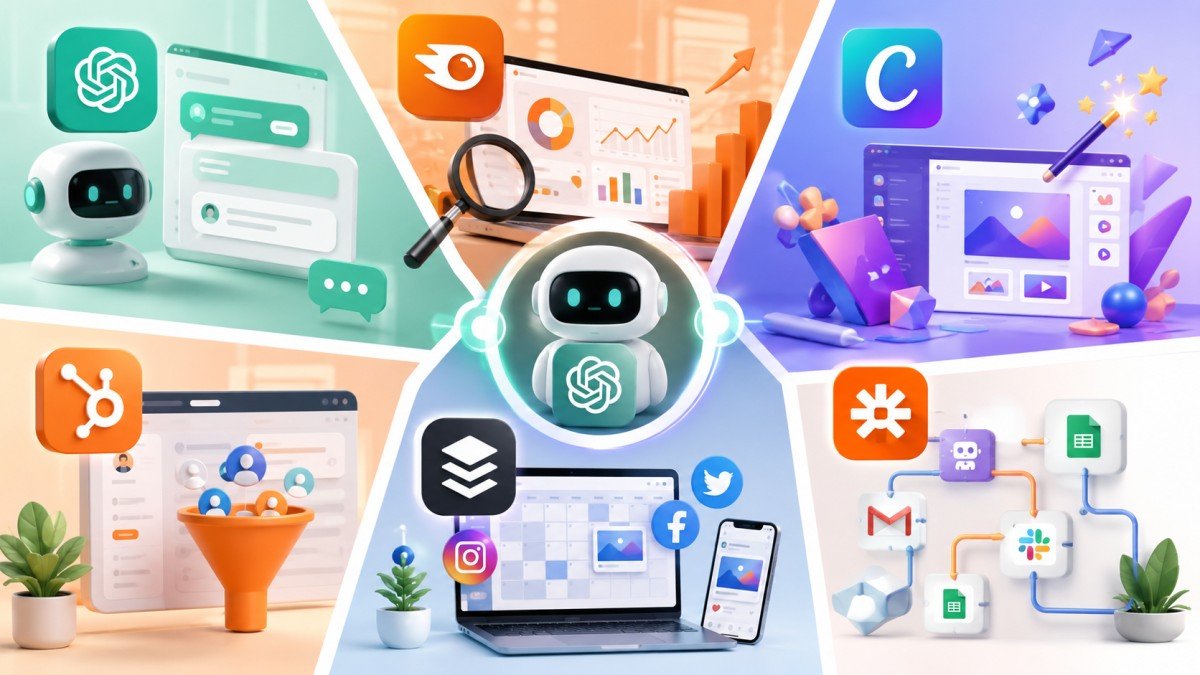
Small business owners have to wear multiple hats. From planning to drafting emails to keeping a good rapport with clients– the workload has always been huge. Then I was introduced to AI tools as a practical solution. It took a little work off their plate, helping them manage their business efficiently.
However, I’ve come to understand that AI is not a magic marketing wand. There are still many things that require a human touch. Like improving search strategy, creativity, fact-checking, and more. But AI tools can simplify the work or act as a guide to make the work process easier. Here’s how.
Small Businesses and Their AI Marketing Solutions
Running a business means making dozens of decisions every day. Think of AI as the extra pair of hands that handles the heavy lifting. AI is not the brain behind the business. It can make mistakes and needs constant human supervision. It works best as an assistant, not as the person running the business.
Use machines to generate ideas, but don’t let them make the decisions. AI can be good at finding ideas, spotting trends, and preparing social posts, but the actual business management is in your hands. For example, you can use AI to write blogs for your business. But the tone and what you want to say depend on you because you aren’t the only small business using AI to write content, so your brand voice sounding like another is a possibility. You can’t blindly rely on AI to portray your brand’s voice. Here’s how you can strike a balance with the right AI tools.
AI Marketing Tools That Make Your Work Easier
Here are some AI-powered marketing tools that are essential for small businesses in 2026.
- ChatGPT

Best for content or marketing ideas
ChatGPT has emerged as an essential AI solution for small businesses seeking to maximize productivity without significantly increasing overhead. Built on advanced large language models, ChatGPT acts as a 24/7 virtual assistant capable of streamlining daily operations across marketing, customer communication, and content creation.
By handling repetitive and time-consuming drafting tasks, ChatGPT allows lean business teams to focus on strategy and high-impact growth initiatives.
- Semrush
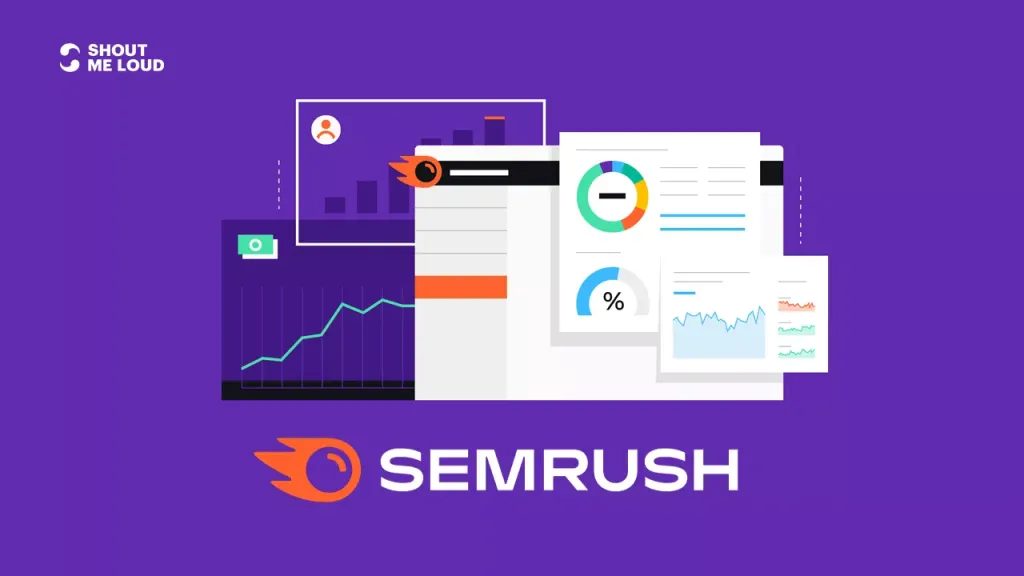
Best for SEO and competitor research
Semrush remains an industry-leading digital marketing suite that connects traditional search engine optimization (SEO) with modern answer engine optimization (AEO). By bringing competitive intelligence, keyword tracking, and website health under one roof, it enables small businesses to maintain high visibility across both classic search engines and AI-driven platforms. If you already use Semrush for SEO, its AI marketing toolkit is worth adding to manage traditional and AI engine tracking in one place.
- Canva Magic Studio
Best for visual marketing
Canva Magic Studio is one of the most essential AI tools every business owner should use to create high-impact visual content without hiring a dedicated design team. By bringing generative design and photo-editing features into a single drag-and-drop workspace, it allows lean teams to scale their brand assets across multiple channels in seconds. By reducing the friction of graphic creation and photo editing, Canva Magic Studio empowers small business owners to maintain a sleek, professional visual identity with minimal time investment.
- HubSpot
Best for CRM and marketing automation
HubSpot stands out as a top-tier AI platform for small and medium businesses because it embeds AI directly into its core CRM infrastructure rather than adding it as a clunky third-party layer. Powered by its native Breeze AI architecture, HubSpot equips lean teams with enterprise-level automation across marketing, sales, and service functions.
By consolidating data management and AI task automation into a single intuitive dashboard, HubSpot eliminates the expense of juggling disparate tools. It enables growing businesses to scale customer operations, improve conversion rates, and maintain high data quality with minimal manual overhead.
- Buffer
Best for social media management
Buffer is one of the top Artificial Intelligence marketing tools for business when it comes to planning, creating, scheduling, and managing your social media posts in one place. The AI in Buffer can help generate ideas and customize content for different channels. However, you must carefully review each post to ensure that it is posted like a post from your brand, not just any marketing bot
- Zapier
Best for marketing workflow automation
Zapier functions as a central automation engine and is one of the most important AI marketing tools for small businesses seeking to streamline operations. By integrating AI directly into its workflow builder, Zapier allows non-technical teams to connect thousands of web applications and build automated processes without writing code.
By eliminating manual data entry and bridging the gaps between isolated marketing tools, Zapier allows small teams to run complex, multi-channel campaigns with minimal effort.
How AI can be utilized without sacrificing the human touch
While AI can help speed up marketing efforts, your brand doesn’t have to sound like it was written by a robot who just picked up some corporate jargon. A well-planned Google advertising strategy can combine AI-powered efficiency with a human voice to keep the marketing strategies trustworthy and engaging.
Trust AI-driven marketing tools for small businesses without compromising on uniqueness. Confirm facts, figures, claims, quotations, and key points before posting them online.
- Preserve brand voice and originality to grow your business. AI can provide a good starting point, but it’s your persona that will make it unique. Include your own experiences, opinions, examples, and brand style, so it really sounds like you.
- Review ads, emails, web pages, or social posts before publishing. This will increase your brand’s authoritativeness, thus elevating the AI’s impact on marketing outcomes.
AI can be a great marketing assistant but not the marketing boss. It is a good idea for small businesses to personalize emails and create social media content. Always track the results before implementing more tools. The true power lies in the integration of AI’s efficiency with human expertise, creativity, and knowledge of the brand.
Final Takeaway
AI marketing tools aren’t just novelties for early adopters. They are powerful drivers of efficiency for growing businesses.
Still, relying entirely on AI as a turnkey solution is a misstep. Sustainable growth requires a balanced strategy: identify your core operational bottlenecks first, then implement the specific AI tools built to solve them.
FAQ
1. How do I choose the right AI tools for my specific business needs?
Start by identifying your single biggest marketing pain point—whether that is content creation, SEO, social media management, or workflow automation. From there, select budget-friendly, user-friendly software that offers clear, measurable advantages for your business.
2. Is investing in AI marketing software worth it for small businesses?
AI tools will come in handy in minimizing repetitive work and increasing the efficiency of small teams while running marketing campaigns effectively.
3. What are the best free AI marketing tools?
ChatGPT, Canva, Grammarly, and HubSpot all offer free plans or trial tiers with AI features. Before committing to a specific tool, review its usage limits and feature restrictions to ensure the free tier meets your ongoing business needs.
4. What is the best AI marketing software for startups?
There is no single “best” option. The right tool depends on your specific business goals. ChatGPT excels at content creation, HubSpot streamlines CRM and workflow automation, Semrush drives SEO strategy, and Canva simplifies visual marketing. Rather than replacing marketers, small businesses should leverage these AI tools to boost efficiency and scale their output.
5. How can small businesses use AI without replacing marketers?
Use AI to automate repetitive work, including brainstorming, writing, scheduling, and analyzing data. Have marketers focus on strategy, creativity, customer interactions, and decision-making.


Amilia Brown is a seasoned business writer & strategist who simplifies complex business concepts and turn them into engaging narratives. As a trusted business writer, she delivers actionable insights with precision.




 Indian CEOs in America: A Detailed Account of the Masterminds
  Add Boosters to Your Business Wheels in 2025 with These 5 Strategies
  6 Skills Every Business Leader Should Possess and Hone
  The Vital Role Of Plastic Tubing In Our Medical Infrastructure
  Why Treating Your Employees like Assets and Investing in Them is a Good Idea