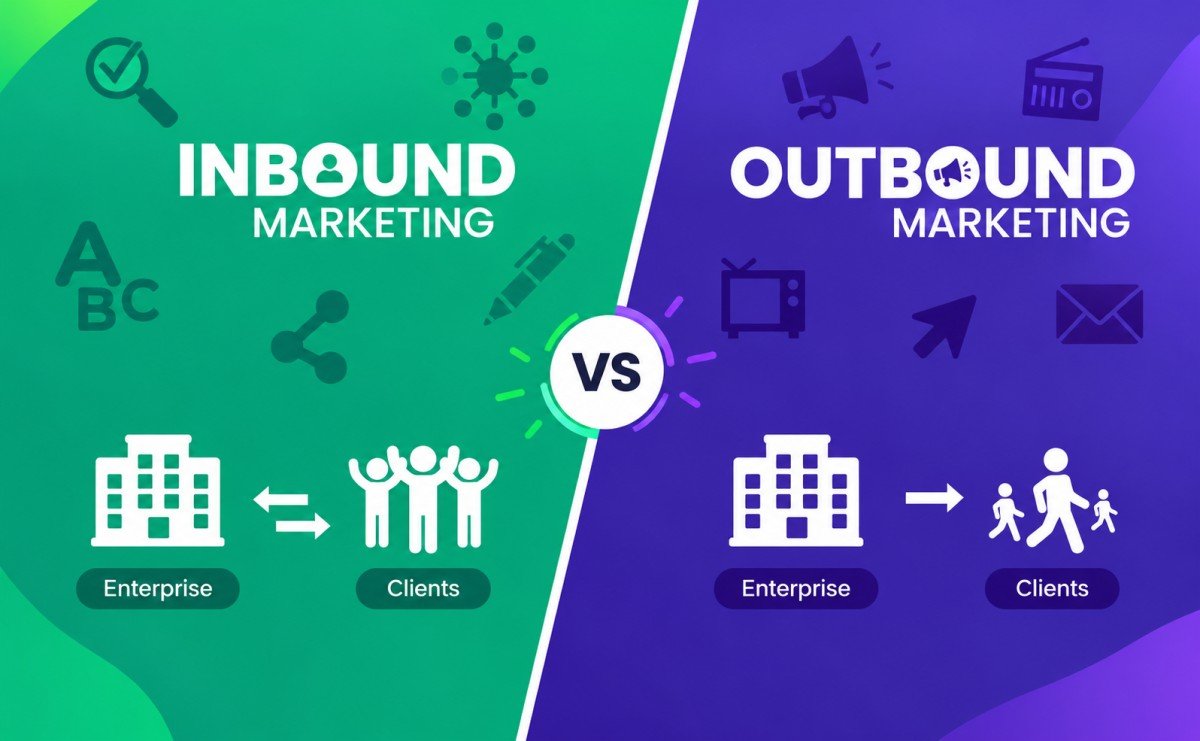
Imagine a small business launching a new skincare product. It can either attract potential customers through helpful blogs and social media or reach out directly through emails, ads, and sales calls. Yes, they are separate marketing strategies: inbound and outbound marketing. So, what’s the difference?
An inbound marketing and outbound marketing comparison shows how businesses attract customers through valuable content versus reaching them through direct promotional efforts. For instance, when someone searches for the best travel services and finds a proper guide, inbound marketing is in action. When a software company purchases LinkedIn ads targeting IT directors, that’s outbound marketing in action. In this guide, we’ll take a closer look at both.
What Is Inbound Marketing?
Inbound marketing is a customer-centric business strategy that attracts customers by providing valuable content and tailored experiences rather than just running traditional ads. Inbound marketing does not interrupt potential customers with unwanted commercials. Rather, it earns attention by solving problems the users are already trying to address.
How Inbound Marketing Works
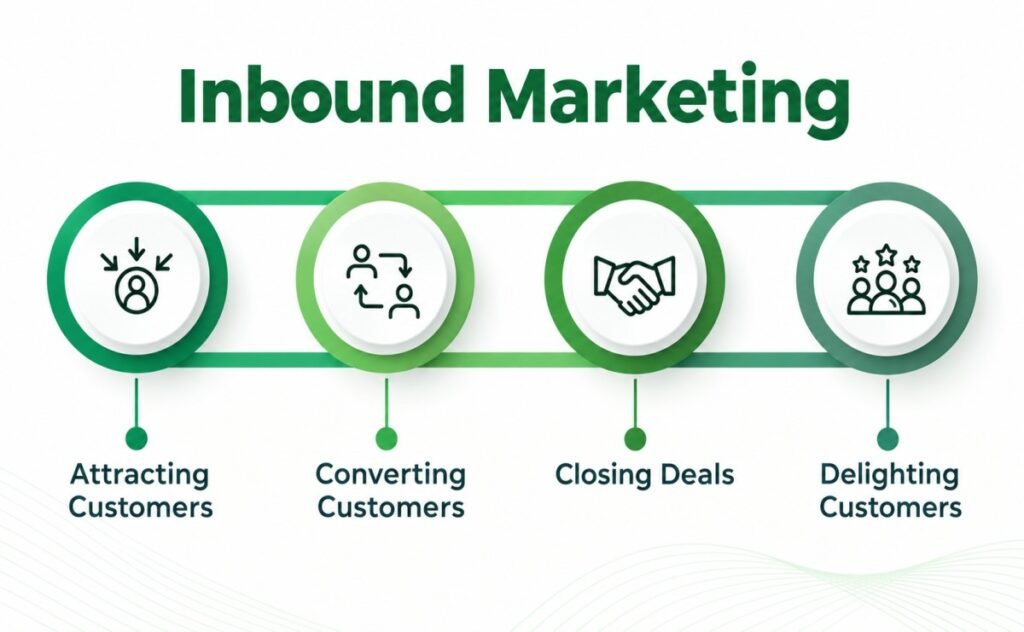
Inbound marketing channels work by attracting potential customers with useful and relevant content instead of directly pushing advertisements. Also known as pull marketing, it utilizes blogs, videos, social media posts, SEO content, and other resources to answer people’s questions or solve their problems. As customers engage with this content, they gradually learn about the brand and may eventually become leads or buyers. Committed customers further expand the reach and impact by sharing their experiences, reviews, and testimonials.
- Example: I published a fitness blog on “Best Exercises for Beginners” for a fitness brand. They sold home workout equipment. The article helped people searching for beginner workout tips through Google, while they later explored fitness products or services.
What is Outbound Marketing?

Outbound marketing is a traditional approach where businesses actively reach out to potential customers through advertising, cold emails, sales calls, direct mail, or other promotional methods. Instead of waiting for customers to find the brand, businesses take the message directly to their target audience.
How Outbound Marketing Works
Outbound marketing channels work by actively sending a promotional message to a specific target audience. Businesses first identify potential customers and then reach them through channels such as ads, cold emails, phone calls, direct mail, or promotional messages. Also known as push marketing, the goal is to:
- Quickly create awareness
- Generate leads
- Encourage purchases.
Example: Recently worked with a real estate company, writing their ad copy. They ran Facebook and Google ads promoting new apartments to people in a specific location. Interested users could click the ad and contact the company. The goal was to put a brand in front of as many people as possible to generate awareness and capture leads.
Inbound Marketing vs. Outbound Marketing: Key Differences
Inbound marketing focuses on engaging the audience, while outbound marketing is perfect for launching new products or entering new markets, as it ensures widespread visibility. Inbound marketing and outbound marketing key points may differ. Here’s how.
1. Approach and Communication

Inbound marketing focuses on attracting customers by providing useful information that answers their queries. The communication is usually educational rather than directly promotional.
For example, a skincare brand might publish a blog explaining “How to Choose the Right Moisturizer for Dry Skin.” Someone searching for this information may discover the brand through Google and later explore its products.
Outbound marketing strategy, on the other hand, takes the message directly to potential customers. The business initiates the conversation through advertisements, cold emails, sales calls, direct promotions, and paid ads. While outbound marketing requires continuous spending to maintain results, it delivers immediate visibility and predictable lead volume that inbound tactics cannot match in the short term.
For example, the same skincare brand might run Instagram ads promoting a new moisturizer with a 20% launch discount and direct users to its product page.
2. Cost and Budget

Inbound marketing costs can build gradually because businesses often invest in creating content, SEO, videos, newsletters, and social media posts. A well-written blog can continue attracting visitors months or even years after it is published.
For example, a small accounting firm could create a detailed guide on “How to File Taxes for a Small Business” and continue receiving organic traffic without paying for every visit.
Outbound marketing is more expensive and often requires a more immediate advertising budget. Unlike inbound marketing, outbound marketing generally has a low ROI. Businesses pay to put their message in front of an audience through platforms such as Google Ads, social media advertising, and so on.
For example, a local restaurant may spend money running Facebook ads to promote a weekend offer and attract new customers quickly.
3. Long-Term Impact
Inbound marketing generally builds a long-lasting relationship and fosters customer loyalty. Old blog posts and optimized pages keep bringing in free web traffic for years.
For Example: Educational content positions your brand as a helpful advisor, leading to higher customer retention. Results take many months of hard work before they show steady results.
Outbound Marketing pushes messages out to a broad audience through ads, cold emails, and events. Ads and paid campaigns do not build permanent value. Once you stop paying, the traffic stops completely. Showing the same ads repeatedly causes audience fatigue, which leads to ignoring or blocking your messages.
Also, if you’re having cash flow problems, you might struggle with paying for the ads, which hampers your reach and lead generation.
For Example: A clothing store runs paid ads on Instagram to attract customers. When the store stops paying for the ads, the ads stop showing and the customer traffic drops.
4. Customer Engagement
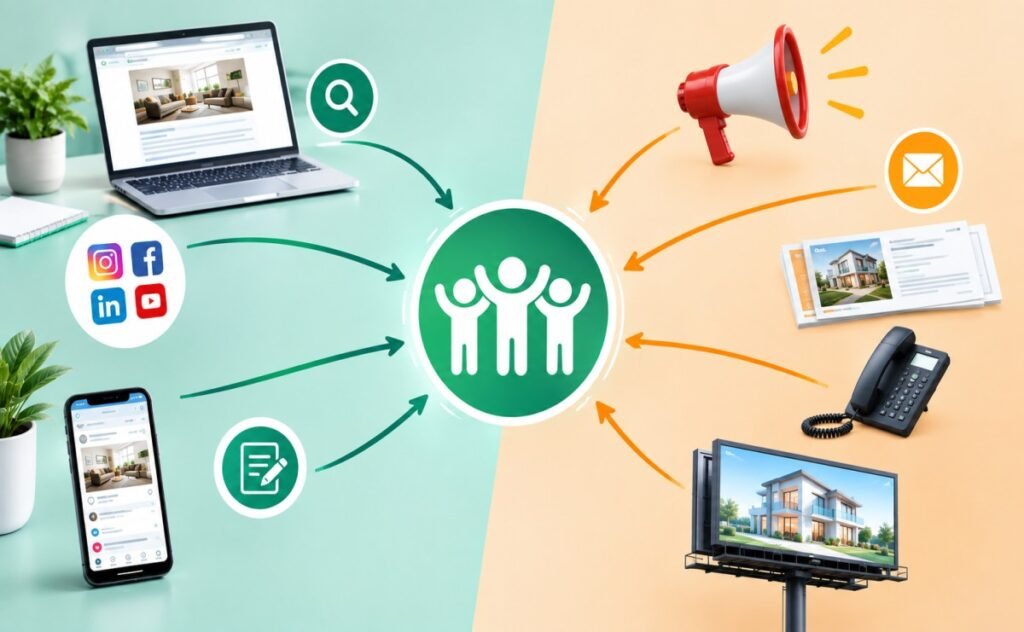
Inbound marketing generally encourages two-way engagement. Customers can read articles, watch videos, leave comments, download guides, subscribe to newsletters, or interact with social media content.
For instance, a fitness company could publish a beginner workout video and invite viewers to share their progress or questions.
Outbound marketing is often more promotion-focused. Outbound campaigns deliver leads only as long as budgets are active. Once advertising spending ends, traffic and lead generation cease immediately.
For instance, a customer may see an advertisement, receive a promotional email, or get a sales call without actively looking for the product. For example, a telecom company might send existing customers an email, offering an upgraded internet plan.
5. Targeting and Personalization
Inbound marketing often attracts people based on their interests and search intent. It uses SEO, keywords, and topic clusters so your brand appears when users look for solutions.
For example, someone searching for “best running shoes for beginners” is already showing interest in the topic. A sports retailer can create helpful content around that search and naturally introduce relevant products.
Outbound marketing filters lists by firmographics, company size, industry, or job title to find the best-fit accounts. It allows businesses to proactively select who should see a message.
For example, a luxury car company could run digital ads targeting people in a particular location, age group, or income segment to understand customer behaviour.
6. Return On Investment
Inbound marketing can be measured through metrics such as organic traffic, search rankings, content engagement, leads, conversions, and customer acquisition.
For example, a software company can track how many people read its blog, download a free guide, sign up for a demo, and eventually become paying customers.
Outbound marketing can often provide more direct campaign-level measurements. A business running Google or social media ads can track impressions, clicks, leads, conversions, cost per lead, and revenue generated.
For example, if an online store spends $1,000 on an advertising campaign and generates $4,000 in attributable sales, the business can evaluate whether the campaign delivered a worthwhile return.
Comparison Table
Here’s a quick table that highlights the main differences between inbound and outbound marketing at a glance.
| Factor | Inbound Marketing | Outbound Marketing |
| Approach | Attracts customers | Reaches customers directly |
| Channels | SEO, blogs, social media | Ads, calls, emails |
| Focus | Education and trust | Promotion and sales |
| Results | Slower, long-term | Faster, short-term |
| Cost | Often lower over time | Usually requires ongoing spending |
| Best for | Building relationships | Quick awareness and leads |
Creating a Balanced Marketing Strategy
According to HubSpot’s case study, its Initial division used blog posts, email campaigns, social media, landing pages, and targeted messaging to attract and nurture potential customers. In the first eight months, website visits increased by 57%, while leads and sales increased by 76%. In the following year, its marketing ROI increased by 671%.
That’s why blending both methods creates a stronger strategy than using just one. Inbound marketing pulls customers in with helpful content, while outbound marketing pushes your message out to a wider audience. Combining them helps you build trust and speed up sales.
Final Takeaway
Inbound and outbound marketing function as complementary strategies rather than competing approaches. Inbound marketing builds visibility and trust by attracting customers, while outbound marketing actively reaches customers with targeted promotional messages. In practice, many businesses combine both to create a more complete marketing strategy and cultivate long-term growth.
FAQ
1. Is inbound marketing better than outbound marketing?
There is no specific answer to this. It completely depends on your business goals, audience, budget, and sales cycle. Inbound marketing is often more effective for building long-term trust, while outbound marketing can deliver faster reach.
2. Which is better for B2B companies: inbound or outbound marketing?
For B2B companies, outbound marketing is often better for a proactive reach through direct messaging, advertising, or cold outreach to raise immediate awareness, while inbound marketing is less preferable here.
3. Should businesses use inbound or outbound marketing?
This solely depends on the business’s needs. For instance, a clothing brand might use inbound marketing by sharing helpful style tips to reach the target audience while using outbound marketing through promotional emails to reach potential customers directly.
4. Which is more cost-effective, inbound or outbound marketing?
No strategy can be termed as better here. Both have separate pros and cons. For instance, Outbound tactics like paid ads bring quick visibility, while inbound SEO and blogs build traffic.


Amilia Brown is a seasoned business writer & strategist who simplifies complex business concepts and turn them into engaging narratives. As a trusted business writer, she delivers actionable insights with precision.



 Indian CEOs in America: A Detailed Account of the Masterminds
  Add Boosters to Your Business Wheels in 2025 with These 5 Strategies
  6 Skills Every Business Leader Should Possess and Hone
  The Vital Role Of Plastic Tubing In Our Medical Infrastructure
  Why Treating Your Employees like Assets and Investing in Them is a Good Idea